The Beginner's Guide to Home Brewing Kits
One-gallon or five? Extract or all-grain? How to pick a first kit you'll actually use twice.
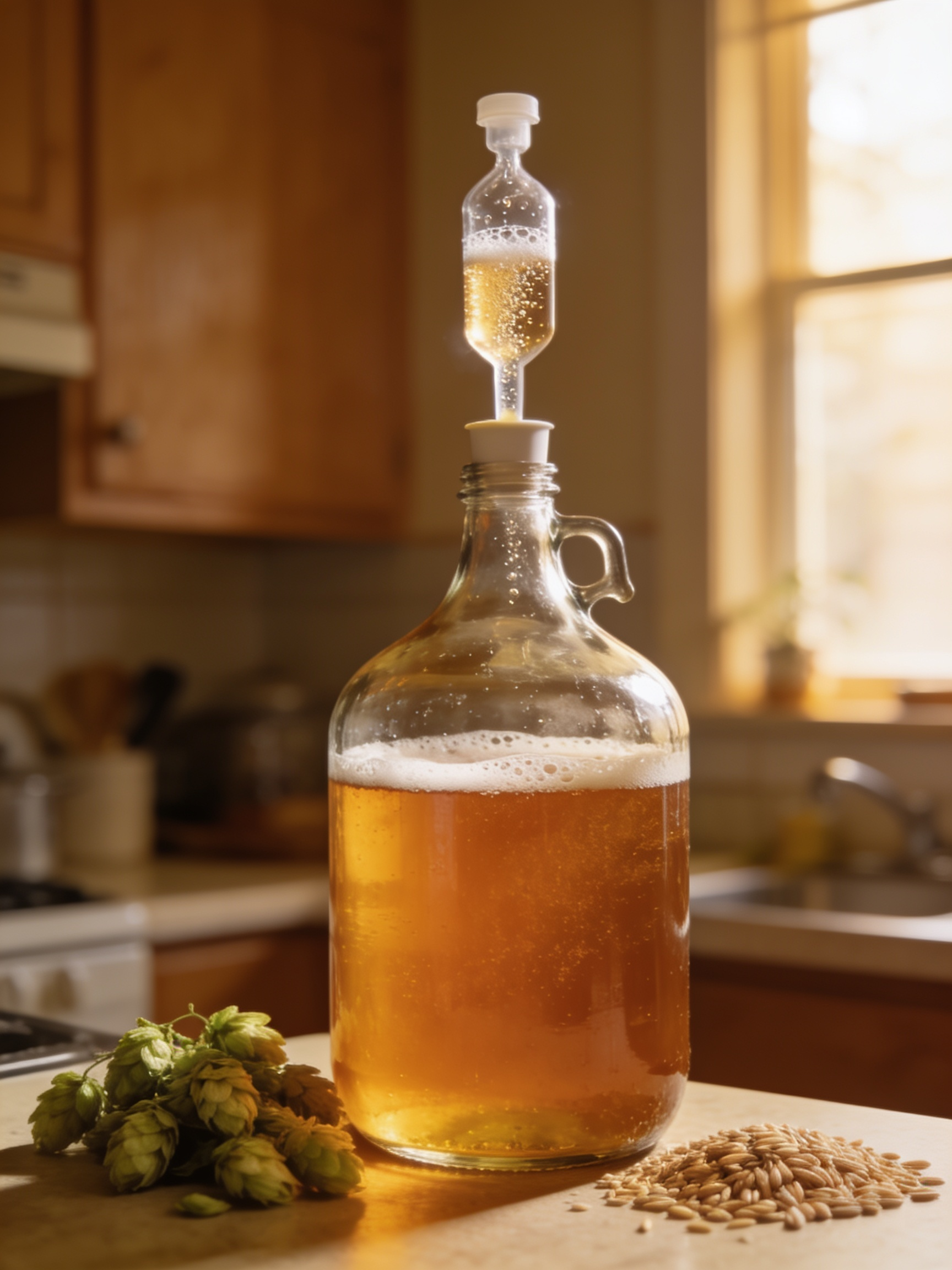
Home brewing has one of the highest abandonment rates of any hobby we cover. The pattern is depressingly consistent: an enthusiastic January purchase, one chaotic brew day, six weeks of waiting, a mediocre first beer, and a fermenter that spends the next decade storing Halloween decorations. Most of that attrition traces back to buying the wrong first kit — usually too big, too complex, or missing the unglamorous parts that actually determine whether batch one tastes good.
Start smaller than your ambition
The five-gallon kit is the traditional default, and for most beginners it's a mistake. Five gallons is roughly fifty bottles of beer — fifty bottles of your first attempt, brewed before you knew what you were doing. A one-gallon kit produces eight to ten bottles, takes half the time on brew day, fits in an apartment kitchen, ferments in a closet, and lets you make mistakes at one-fifth the cost in ingredients and heartbreak.
The counterargument — that brew day is nearly as much work for one gallon as five — is true. Make your third batch the five-gallon one, once you know you'll still be brewing in June.
Extract first; all-grain can wait
Malt extract kits skip the multi-hour process of mashing grain, cutting brew day from five-plus hours to about two and removing the single largest source of beginner error. Brewing snobbery dismisses extract beer, and the snobbery is out of date: fresh extract from a kit that sells through its stock quickly makes genuinely good beer. Every skill that actually ruins first batches — sanitation, fermentation temperature, patience — is learned just as well on extract. Move to all-grain when you find yourself wanting to control the variables extract hides from you. You'll know.
What a good starter kit must include
- A no-rinse sanitizer. Non-negotiable. Nearly every infected, sour, or "homebrew-tasting" first batch is a sanitation failure. If the kit skimps here, it's not a kit; it's a prank.
- A fermenter with an airlock — and ideally a spigot, which spares you learning to siphon on day one.
- A hydrometer or refractometer. The only way to know fermentation is done. Bottling early because the airlock "looked quiet" is how beginners make glass grenades.
- An auto-siphon if there's no spigot. Mouth-starting a siphon is both gross and a sanitation failure (see above).
- Actual instructions with temperatures and times, not a QR code to a video of a man in a garage.
The spec nobody lists: fermentation temperature
Yeast, not the brewer, makes beer — and most beginner ales want a steady 64–70°F. The kits never mention that the warm spot on top of your fridge will push fermentation hot and fill your beer with banana-flavored fusel notes. Before buying anything, identify a closet or corner in your home that holds a stable temperature in the high 60s. If you don't have one, a $25 heating belt or a swamp-cooler tub solves it — budget for that, not for the fancier fermenter.
What you'll actually spend
A worthwhile one-gallon starter kit runs $45–70 with the first ingredient batch included; refill batches cost $15–25. Five-gallon starter setups run $120–200 plus $35–50 per batch, and bottling fifty beers also means acquiring, washing, and sanitizing fifty bottles — a detail that has broken stronger spirits than yours.
The bottom line
Buy a one-gallon extract kit with a real sanitizer, a hydrometer, and a spigoted fermenter. Find your 68°F closet before brew day. Accept that the first batch is tuition. The brewers who clear batch two almost always stick around — and batch two, brewed with clean gear and calm hands, is usually the one that makes the hobby make sense.