Wireless Earbuds for Runners: Five Things to Check Before You Buy
Sweat ratings, ear hooks, and why "9 hours of battery" rarely survives a marathon training block.
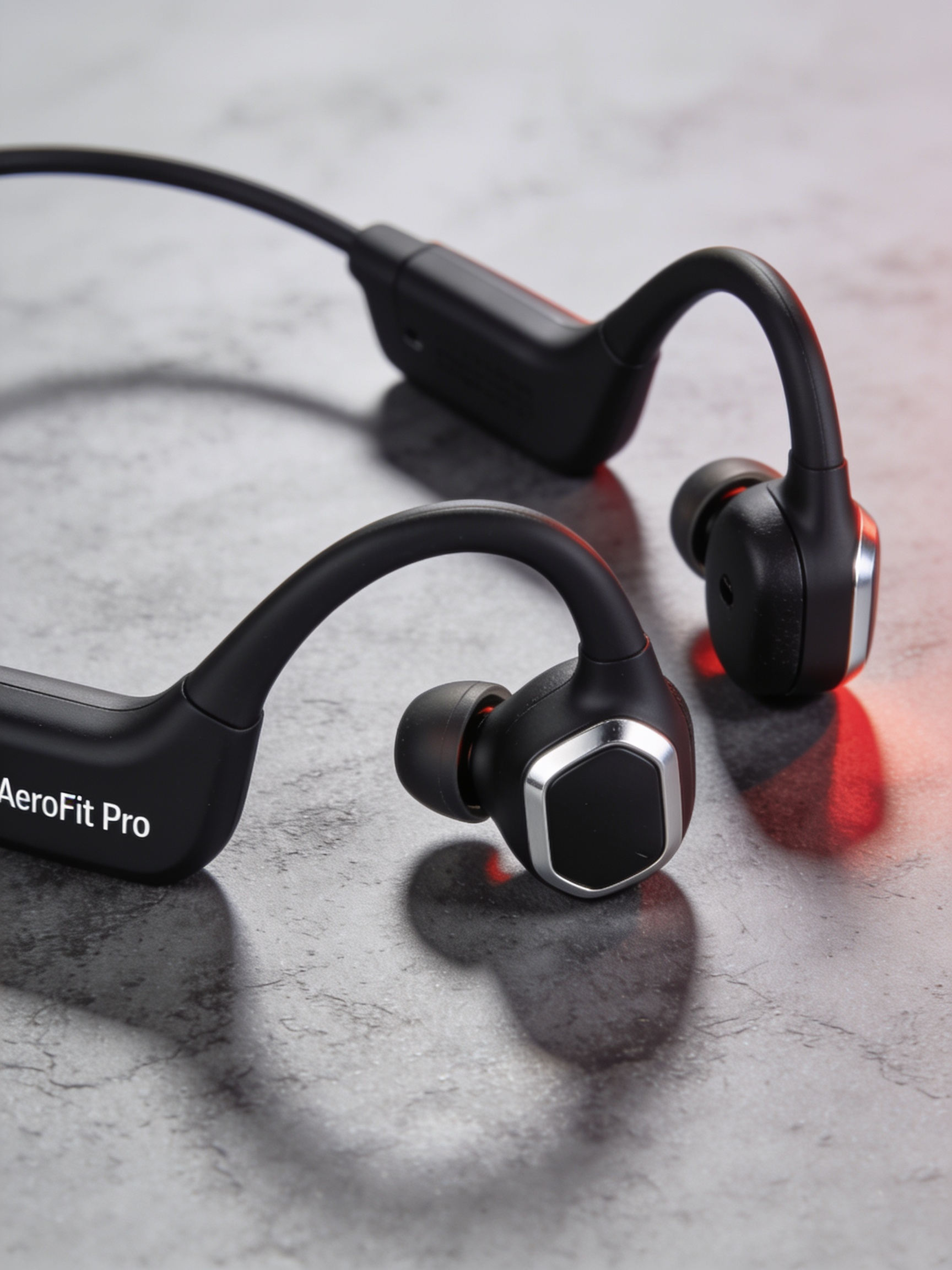
Earbuds that are perfect on a couch can be useless at mile four. Sweat gets into charging contacts, "secure fit" wing tips work loose, and transparency modes that sounded fine in a quiet room can't keep up with traffic. We've run roughly 900 collective miles with eight pairs of sport earbuds over the past year. These are the five checks that ended up predicting which pairs survived — and which ended their careers in a drawer or a storm drain.
1. IPX4 is the floor, not a feature
The IP rating's second digit is the water one. IPX4 ("splash resistant") is the bare minimum for a sweating human, and for heavy sweaters or rainy climates we'd insist on IPX5–7. Two cautions from our testing: sweat is saltier and more corrosive than the lab water these ratings use — the most common failure we saw wasn't the buds dying mid-run but charging contacts corroding over months — so wipe the buds and the case down after wet runs. And note the case itself almost never carries any rating at all. A soaked bud placed in a case can kill both.
2. Decide your fit religion: wings, hooks, or nothing
No spec sheet can tell you whether a bud stays in your ear, but the categories behave predictably. Bare buds rely entirely on matching your ear's geometry — magnificent when they fit, intolerable when they don't. Wing tips (small fins that brace against the ear's ridge) secured every tester's buds but caused pressure soreness past the one-hour mark for two of our four runners. Over-ear hooks never came loose for anyone across the entire test, at the cost of bulk and being annoying with sunglasses. Long-distance runners gravitated to hooks; everyone doing 5Ks stopped caring after week one.
3. Divide every battery claim by your training plan
The "9 hours" on the box is measured at moderate volume with every feature off. Turn on transparency mode (you should — see below) and run at outdoor volume, and our measured numbers came in 30–40% lower. That's the difference between "covers a slow marathon" and "dies at mile 18." Also check the degradation math: lithium cells this tiny lose capacity fast, and a pair that starts at six real hours is a two-year product where a pair that starts at nine might last four. Cells this small are not replaceable. Plan accordingly.
4. Transparency mode is a safety feature; test it like one
If you run on roads, ambient/transparency mode isn't a luxury — it's how you hear the car. But implementations vary wildly: the best of our test pairs passed wind at 10 mph without turning it into a roar, while the worst made every breeze sound like a jet wash, which guarantees the feature gets turned off, which defeats the purpose. If you can't test before buying, search owner forums specifically for "wind noise" plus the model name. Five minutes of reading will tell you.
5. Buttons beat touch controls when your hands are wet
Touch controls and sweat are natural enemies. Every touch-controlled pair in our pool eventually registered phantom taps from sweat drips or jacket hoods — skipping tracks, pausing mid-interval, once memorably calling someone's mother. Physical buttons worked every time, gloved or soaked. It's the least glamorous line on the spec sheet and, by week six of training, possibly the one you'll care about most.
The bottom line
Buy IPX5 or better, pick your fit style by your distances, assume two-thirds of the battery claim, verify transparency mode handles wind, and prefer real buttons. Price, brand, and sound quality matter less than any of those five — a $250 pair of earbuds sounds exactly like a $60 pair when it's lying at the bottom of a storm drain.